
Methodology
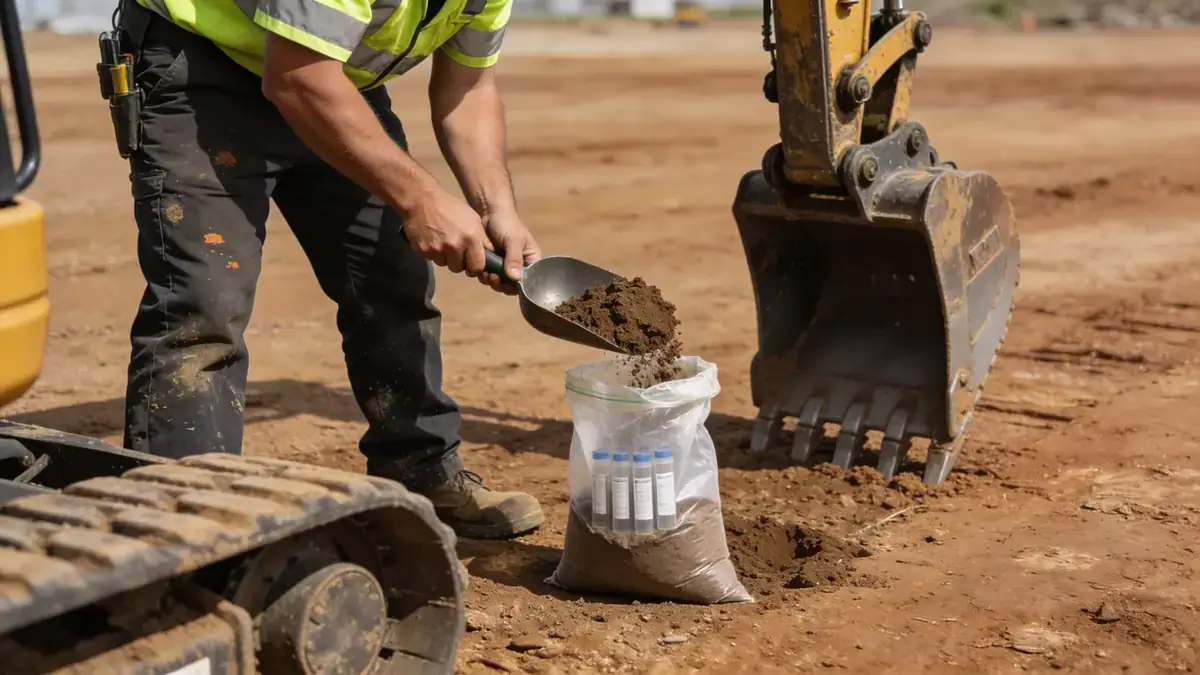
Our methodology for soil mechanics laboratory investigations in Cardiff follows a systematic approach aligned with BS 5930 and Eurocode 7. We begin with a detailed desk study of geological maps and records, then execute a site-specific sampling plan using techniques such as cable percussion drilling and dynamic sampling. Samples are transported to our soil mechanics laboratory under controlled conditions. Testing includes classification, compaction, and strength tests following ASTM and BS standards. All results are reviewed by our senior engineers to provide a coherent geotechnical interpretation tailored to local ground conditions.
Reference Technical Parameters
| Parameter | Reference Value |
|---|---|
| Predominant soil type | Glacial till (boulder clay) and alluvial deposits |
| Maximum seismic acceleration (PGA) | 0.08 g (low seismicity per Eurocode 8) |
| Typical groundwater level | 1.5–4.0 m below ground level |
| Bedrock depth | Variable; typically 10–30 m (Carboniferous Limestone) |
| Typical N60 range (SPT) | 15–35 blows/300 mm in till; <10 in soft alluvium |
Local Considerations — Cardiff
Cardiff's geology is dominated by glacial till overlying Mercia Mudstone and Carboniferous Limestone, with alluvial deposits along the River Taff. Groundwater is often shallow, requiring dewatering considerations for deep excavations. The city's low seismicity (PGA < 0.1 g) simplifies seismic design per Eurocode 8. Soil conditions vary significantly between Cardiff Bay (soft alluvial clays) and northern suburbs (stiffer tills). Common challenges include variable bedrock depth, cohesive soils with high plasticity, and potential for dissolution features in limestone areas. Our team routinely addresses these through targeted granulometry & atterberg testing.
Request a Quote
Our team reviews your project and issues an initial report at no cost.
Or write us directly at [email protected]
Services in Cardiff
Locations covered in Cardiff
Applicable Standards
- Eurocode 7 (BS EN 1997)
- BS 5930:2015 (Code of practice for ground investigations)
- ASTM D1586 (Standard Penetration Test)
- ASTM D698 (Standard Proctor)
- ASTM D3080 (Direct Shear Test)
Frequently Asked Questions
What soil types are commonly found in Cardiff?
Cardiff predominantly features glacial till (boulder clay) with variable gravel and cobble content, alluvial deposits along the rivers, and occasional peat layers. Deeper ground includes Mercia Mudstone and Carboniferous Limestone bedrock. These conditions require comprehensive soil mechanics laboratory testing to determine engineering properties.
Is seismic design required for structures in Cardiff?
Cardiff lies in a low seismicity zone per Eurocode 8, with a peak ground acceleration of approximately 0.08 g. While seismic design is not typically critical for most structures, it should be considered for essential facilities or those with high consequences of failure. Our laboratory provides dynamic testing parameters if required.
When is a soil mechanics laboratory test mandatory in Cardiff?
British Standards (BS 5930) and Eurocode 7 recommend ground investigation for all significant construction. Local planning authorities often require geotechnical reports for developments on soft ground, near watercourses, or with deep excavations. The Building Regulations also imply adequate site investigation to ensure safe foundation design.