Methodology
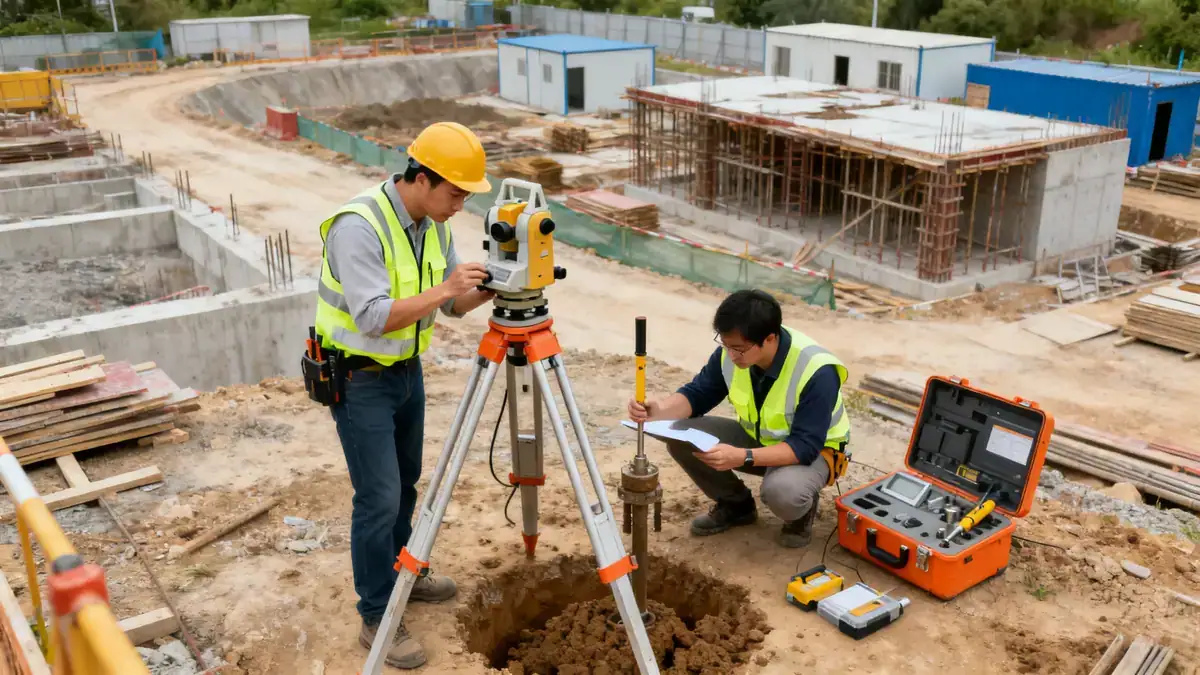
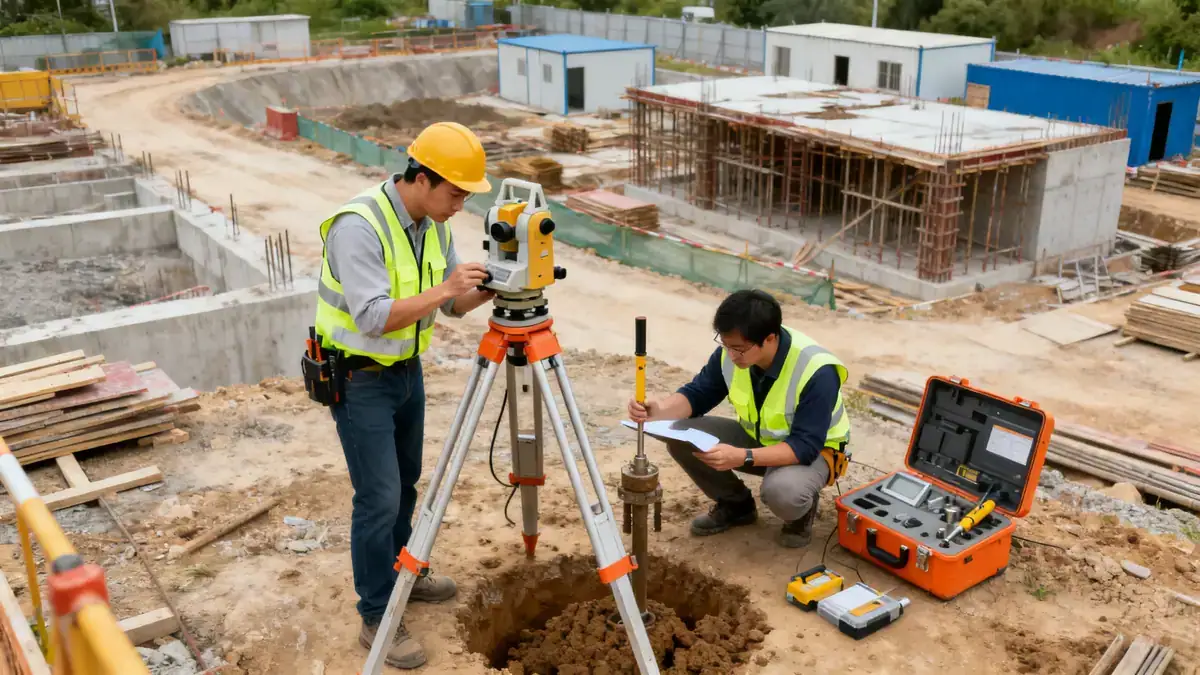
Our methodology for soil mechanics laboratory work in Belfast follows established protocols, including ASTM D1586 for standard penetration testing. We collect undisturbed and disturbed samples using rotary core drilling and thin-walled tube samplers, ensuring representative material for subsequent analysis. In our laboratory, we perform index properties tests, strength assessments, and consolidation tests under controlled conditions. Our procedures align with British Standards, providing consistent and comparable results. This systematic approach allows us to characterize soil behavior accurately, supporting geotechnical design and construction decisions. For detailed service information, visit our soil mechanics laboratory page.
Reference Technical Parameters
| Parameter | Reference Value |
|---|---|
| Predominant soil type | Glacial till (boulder clay) with sand and gravel lenses |
| Maximum seismic acceleration (PGA) | 0.1 g (low seismicity, per BS EN 1998-1) |
| Typical groundwater level | 1–4 m below ground surface |
| Bedrock depth | 10–30 m (basalt or sandstone) |
| Typical N60 range | 10–50 blows/300 mm for glacial till |
Local Considerations — Belfast
Belfast's subsurface is dominated by glacial till (boulder clay) overlying basalt or sandstone bedrock. Groundwater levels are typically shallow (1–4 m), requiring careful dewatering considerations. Seismic risk is low, but site-specific assessments per Eurocode 8 are recommended for critical structures. Urban redevelopment on former industrial sites may encounter anthropogenic fill and contamination. For accurate characterization, our granulometry & atterberg testing provides essential data on soil plasticity and particle size distribution, informing excavation and foundation decisions.
Request a Quote
Our team reviews your project and issues an initial report at no cost.
Or write us directly at [email protected]
Services in Belfast
Applicable Standards
- ASTM D1586
- BS 5930
- Eurocode 7
- Eurocode 8
Frequently Asked Questions
What types of soil are commonly found in Belfast?
The predominant soil in Belfast is glacial till (boulder clay), a dense mixture of clay, sand, gravel, and cobbles. Soft alluvial deposits and peat are present in low-lying areas near the River Lagan.
Are soil mechanics studies mandatory for construction in Belfast?
While not always mandatory, local building regulations and the need for foundation design typically require a geotechnical investigation. For larger or complex projects, a soil mechanics laboratory study is essential to ensure structural safety and compliance.
Does seismic risk affect soil testing requirements in Belfast?
Belfast is in a low-seismicity region, but Eurocode 8 recommends site-specific ground investigation for critical structures. Soil testing helps determine site classification and liquefaction potential, even for moderate seismic events.