Methodology
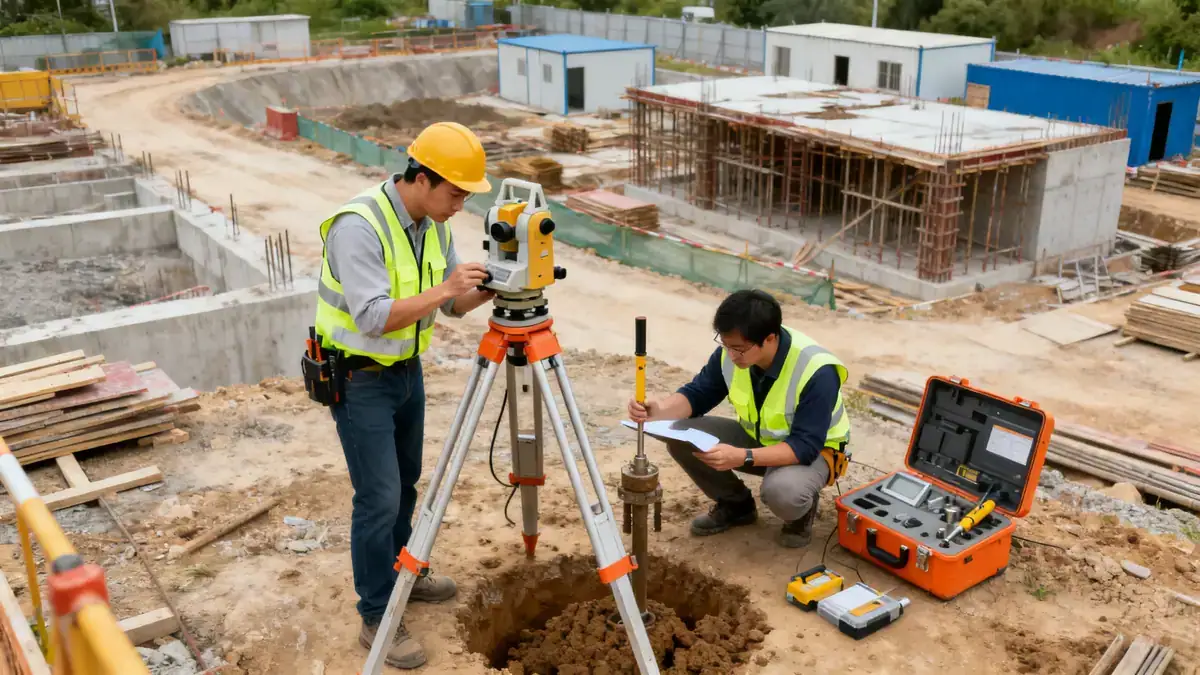
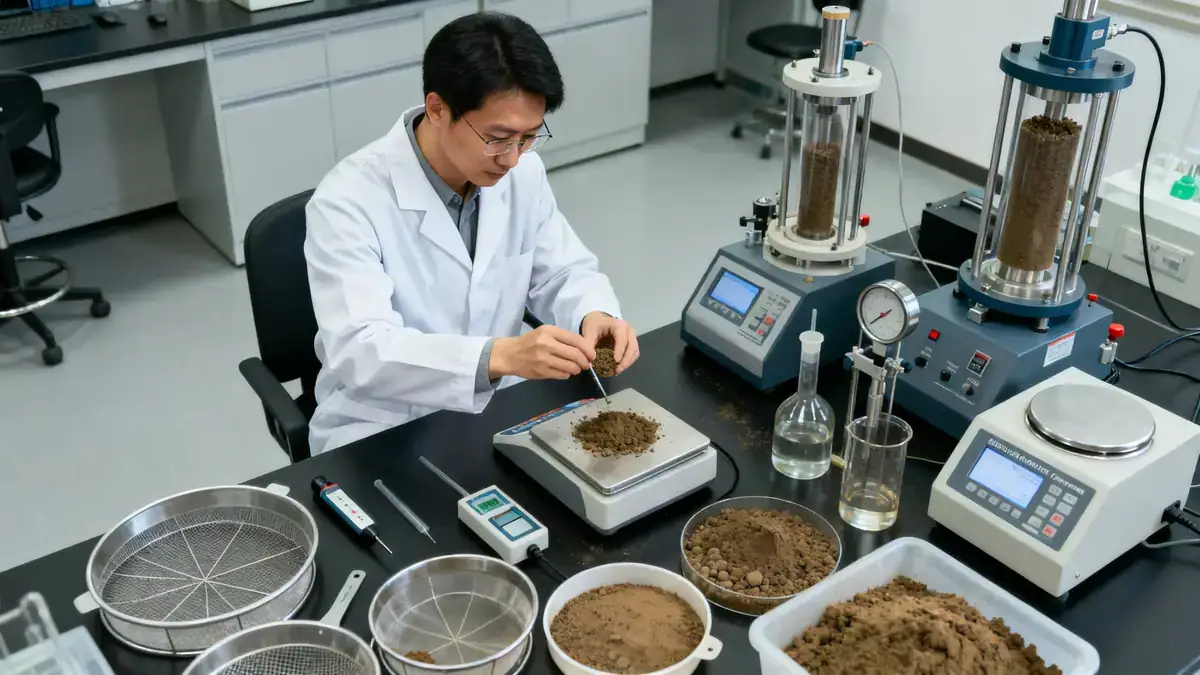
Our approach for soil mechanics laboratory investigations in Wolverhampton follows a phased methodology. Initially, we review existing geological mapping and site history to identify potential hazards such as mining or soft ground. Fieldwork includes boreholes with standard penetration testing per ASTM D1586, typically to depths of 8–15 m for residential projects, and continuous sampling for advanced laboratory classification. In the laboratory, we determine index properties, strength parameters, and consolidation characteristics. All work is conducted under a UKAS-accredited quality system. For a detailed overview, visit our soil mechanics laboratory page.
Reference Technical Parameters
| Parameter | Reference Value |
|---|---|
| Predominant soil type | Glacial till (boulder clay) with lenses of sand/gravel |
| Maximum seismic acceleration (PGA) | 0.10–0.15 g (UK seismic hazard map, return period 475 years) |
| Typical groundwater level | 2.0–5.0 m below ground surface, variable seasonally |
| Bedrock depth | 10–30 m (Triassic sandstone / mudstone) |
| Typical N60 range (SPT) | 15–35 blows/300 mm in glacial till |
Local Considerations — Wolverhampton
Wolverhampton is underlain predominantly by glacial till (boulder clay), often with sand and gravel lenses, overlying Triassic sandstone and mudstone. Groundwater levels are typically encountered at 2–5 m depth but can be shallower in low-lying areas. Seismic hazard is low (PGA ~0.10–0.15 g), requiring basic design checks per Eurocode 7. The city's industrial legacy includes shallow mine workings and made ground, particularly in the east. Our granulometry & atterberg testing is essential for assessing shrink-swell potential in clay-rich tills, while proctor & cbr testing supports pavement design for local road schemes. For broader regional context, we coordinate with our soil mechanics laboratory en Birmingham hub.
Request a Quote
Our team reviews your project and issues an initial report at no cost.
Or write us directly at [email protected]
Services in Wolverhampton
Applicable Standards
- Eurocode 7 (BS EN 1997-1 & -2)
- ASTM D1586 (Standard Penetration Test)
- BS 5930 (Code of practice for ground investigations)
- BS 1377 (Methods of test for soils for civil engineering purposes)
Frequently Asked Questions
What are the typical soil types found in Wolverhampton?
Wolverhampton's geology is dominated by glacial till (boulder clay), a stiff, cohesive soil with variable sand and gravel lenses. Underlying this are Triassic sandstones and mudstones. Made ground and fill are common in former industrial areas. A soil mechanics laboratory investigation is essential to characterise these deposits.
Is seismic design required for structures in Wolverhampton?
Yes, although the UK is a low-seismicity region, Eurocode 7 requires a basic seismic assessment for most structures. Wolverhampton falls within a peak ground acceleration range of 0.10–0.15 g for a 475-year return period. Site-specific soil response analysis may be needed for important buildings.
Are geotechnical investigations mandatory for new developments in Wolverhampton?
While not always a statutory requirement for minor works, most local authorities and building control bodies expect a ground investigation report for new builds, especially where mining or soft ground is suspected. A soil mechanics laboratory study provides essential data for foundation design and regulatory compliance.