
Methodology
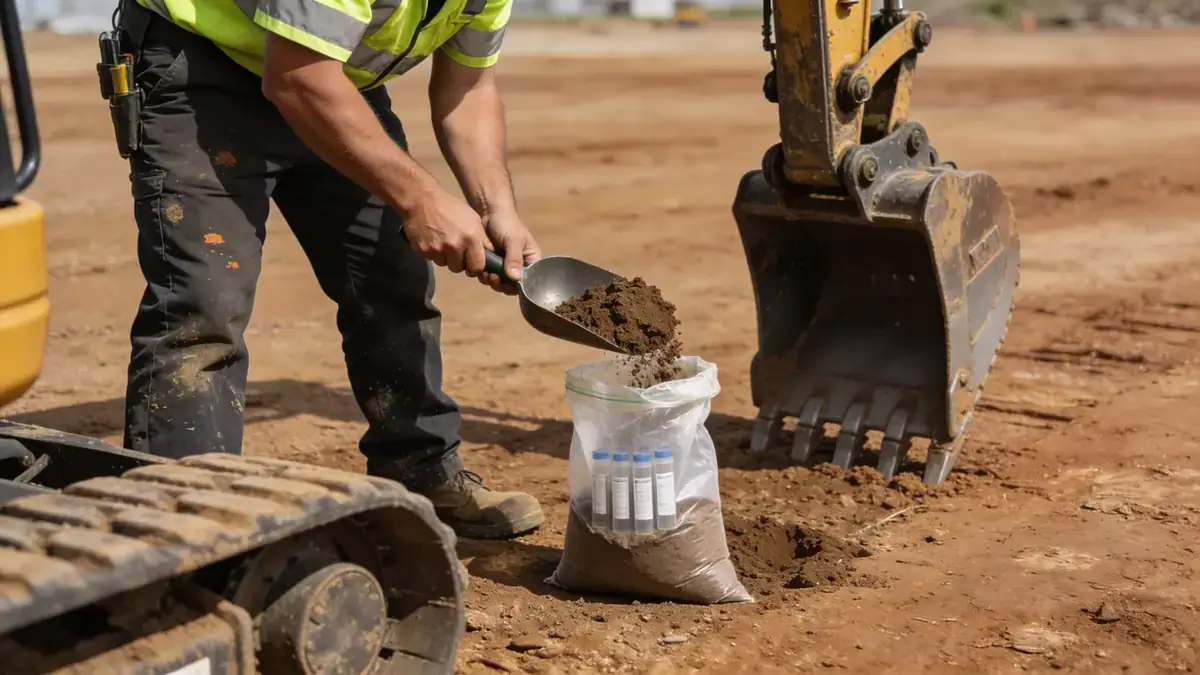
Our methodology for soil mechanics laboratory in Sheffield follows a systematic approach aligned with British Standards. We begin with a detailed desk study of site history and geology, followed by intrusive investigations including boreholes, trial pits, and in-situ testing such as SPT (ASTM D1586) and CPT. Samples are analyzed in our UKAS-accredited laboratory for classification, strength, and consolidation parameters. Our team integrates site and lab data to produce robust geotechnical models. For a comprehensive overview of our capabilities, visit our soil mechanics laboratory page.
Reference Technical Parameters
| Parameter | Reference Value |
|---|---|
| Predominant soil type | Glacial till (clay, silt, sand, gravel) |
| Maximum seismic acceleration (PGA) | 0.08g (low seismicity, Eurocode 8) |
| Typical groundwater level | 2 to 5 m below ground surface |
| Bedrock depth | Variable: 5 to 30 m (Carboniferous Millstone Grit) |
| Typical N60 range (SPT) | 10 to 40 blows/300 mm in till |
Local Considerations — Sheffield
Sheffield's geology is dominated by glacial tills overlying Carboniferous bedrock, with local variations in drift thickness. The water table is typically shallow in valley bottoms, requiring careful dewatering and foundation design. Seismic hazard is low but must be considered for critical structures under Eurocode 8. Urban redevelopment often encounters made ground and buried foundations. Our team provides tailored soil mechanics laboratory services across Sheffield, from the city centre to suburban developments. For projects requiring advanced testing, refer to our granulometry & atterberg services.
Request a Quote
Our team reviews your project and issues an initial report at no cost.
Or write us directly at [email protected]
Services in Sheffield
Applicable Standards
- Eurocode 7 (EN 1997)
- BS 5930:2015 (Code of practice for site investigations)
- ASTM D1586 (Standard Test Method for SPT)
- Eurocode 8 (EN 1998) for seismic design
Frequently Asked Questions
What are the typical soil types encountered in Sheffield?
Sheffield's subsoil is predominantly glacial till, a heterogeneous mixture of clay, silt, sand, and gravel. In some areas, alluvial deposits and made ground are present. Bedrock consists of Carboniferous Millstone Grit and Coal Measures, often at depths of 5 to 30 m.
Is seismic design required for buildings in Sheffield?
Seismic design is required for certain structures under Eurocode 8, but Sheffield is in a low seismicity zone (PGA ~0.08g). However, for critical infrastructure or buildings with high importance factors, a site-specific seismic hazard assessment may be necessary.
Are geotechnical investigations mandatory for construction projects in Sheffield?
While not always legally mandatory, geotechnical investigations are strongly recommended and often required by local planning authorities and building control. They are essential for safe foundation design, especially given Sheffield's variable ground conditions.