
Methodology
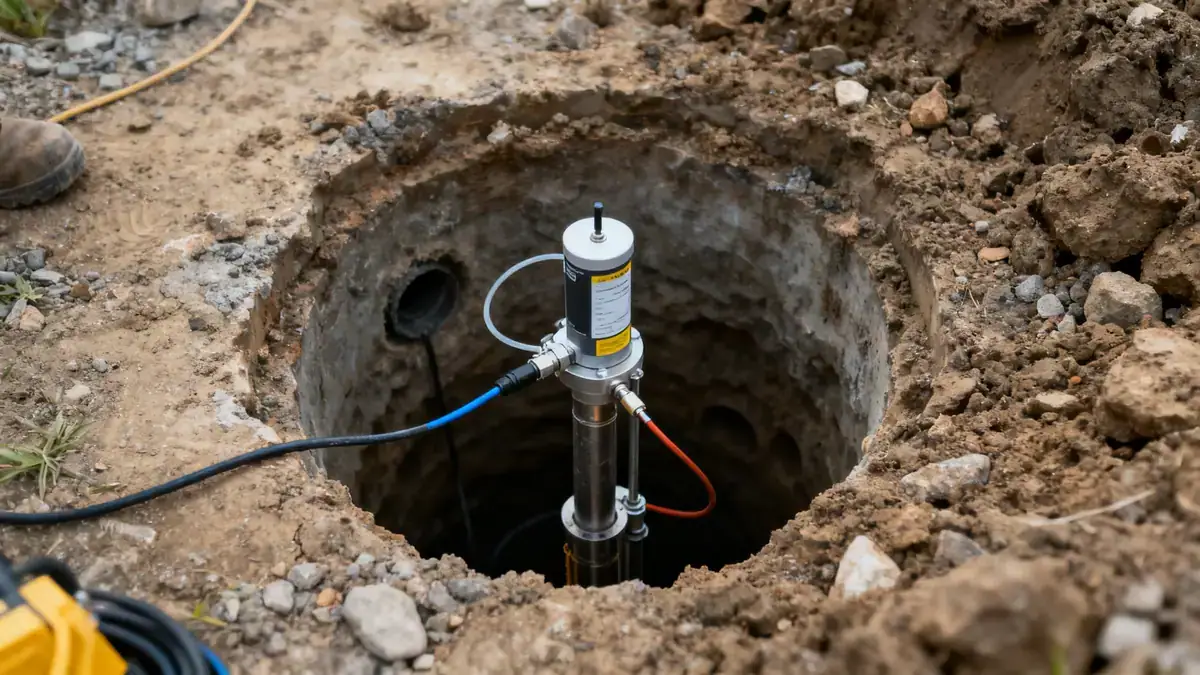
Our methodology in Peterborough follows rigorous field and laboratory protocols. We conduct site investigations using standard penetration tests (SPT) per BS 1377, with sampling intervals typically every 1.0–1.5 m to capture soil variability. Our soil mechanics laboratory integrates advanced testing—including triaxial and consolidation—to characterize strength and compressibility. All procedures align with Eurocode 7 and UK national annexes, ensuring results are directly applicable to local design practices.
Reference Technical Parameters
| Parameter | Reference Value |
|---|---|
| Predominant soil type | Oxford Clay, with river terrace gravels and alluvium |
| Typical groundwater level | 1.5–4.0 m below ground surface |
| Bedrock depth | Variable; typically >20 m (Jurassic limestone beneath clay) |
| Typical N60 range (SPT) | 8–25 blows/300 mm in clay; 30–50 in gravels |
| Seismic hazard (PGA 475-year return) | 0.05–0.08 g (low seismicity per BS EN 1998-1) |
Local Considerations — Peterborough
Peterborough's geology is dominated by Oxford Clay, a stiff to very stiff fissured clay that can swell and shrink with moisture changes. River terrace deposits along the Nene valley introduce granular layers with variable bearing capacity. Groundwater is commonly encountered at shallow depths (1.5–4.0 m), requiring dewatering considerations. Seismic risk is low (PGA <0.08 g), but local site effects may amplify motion in soft soils. Typical projects include residential foundations and commercial developments, where our granulometry & atterberg testing helps assess plasticity and shrinkage potential. For specialized support, our team in soil mechanics laboratory en London also provides regional oversight.
Request a Quote
Our team reviews your project and issues an initial report at no cost.
Or write us directly at [email protected]
Services in Peterborough
Applicable Standards
- BS 1377 (Methods of test for soils for civil engineering purposes)
- BS 5930 (Code of practice for site investigations)
- Eurocode 7 (BS EN 1997-1 and -2)
- BS EN 1998-1 (Seismic design – UK National Annex)
Frequently Asked Questions
What are the typical soil conditions in Peterborough for foundation design?
Peterborough's subsoil generally consists of Oxford Clay overlying Jurassic limestone, with river terrace deposits along the Nene. The clay is stiff to very stiff but can be susceptible to volume changes. Groundwater is often shallow, requiring careful drainage design.
Is a soil mechanics laboratory study mandatory for construction in Peterborough?
While not always legally required for small extensions, most local authorities and building control bodies expect a geotechnical assessment per BS 5930 for new builds or significant alterations. Our laboratory provides the necessary data to comply with these standards.
How does seismic risk affect soil testing in Peterborough?
Peterborough lies in a low seismicity zone (PGA <0.08 g per UK National Annex to Eurocode 8). However, soft clay sites may amplify ground motion, so dynamic soil properties from resonant column or cyclic triaxial tests are recommended for critical structures.