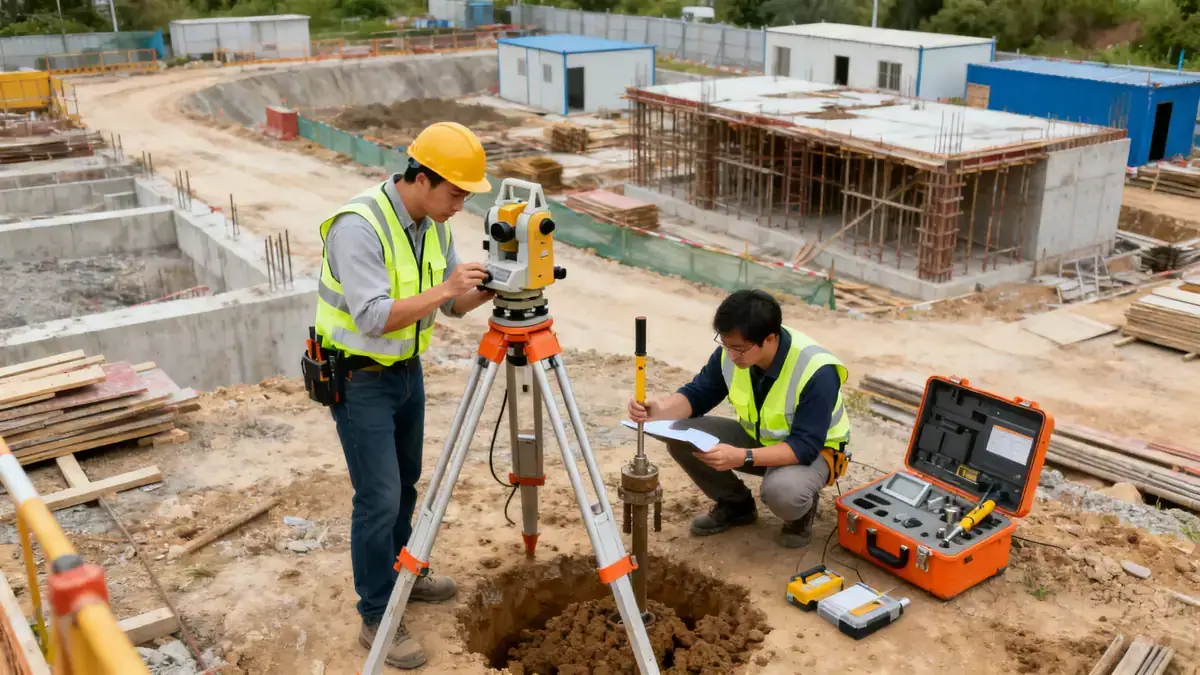
Methodology
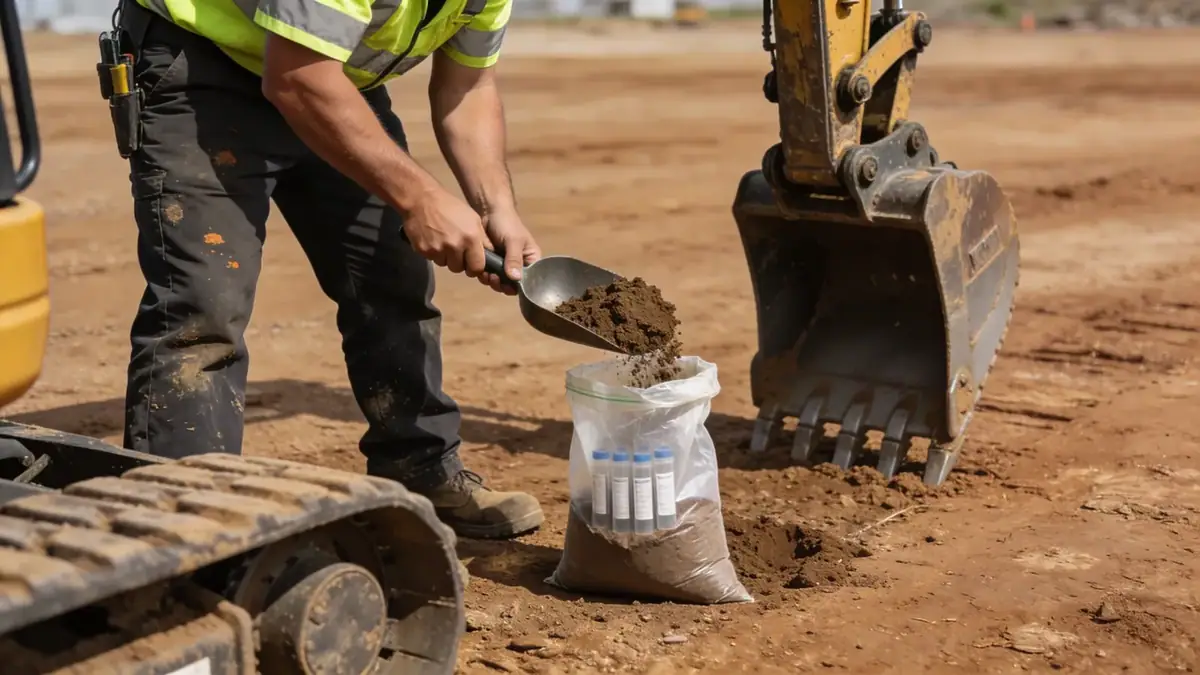
Our methodology in Aberdeen follows a systematic approach to soil investigation and laboratory testing. We begin with a detailed desk study of local geology, followed by field sampling using methods such as SPT (ASTM D1586) and undisturbed tube sampling. In our laboratory, we conduct a suite of tests including granulometry, Atterberg limits, and compaction tests to determine soil behavior. For advanced projects, we perform triaxial and consolidation testing to assess shear strength and settlement characteristics. Our integrated approach ensures that all data is correlated with site conditions, providing a robust foundation for geotechnical design. For a deeper insight into our overall capabilities, visit our soil mechanics laboratory page.
Reference Technical Parameters
| Parameter | Reference Value |
|---|---|
| Predominant soil type | Glacial till and marine clays |
| Typical N60 range (SPT) | 10–30 blows per 300 mm |
| Maximum seismic acceleration (PGA) | 0.08 g (low seismicity) |
| Typical groundwater level | 1.5–3.0 m below ground surface |
| Bedrock depth | 10–25 m (variable) |
Local Considerations — Aberdeen
Aberdeen's subsurface is dominated by glacial till overlying bedrock, with variable marine clays in coastal areas. Groundwater levels are typically shallow, requiring careful dewatering considerations for excavations. Seismicity is low per BS EN 1998-1, but local site amplification may occur in soft soils. The city's contrasting geology between the city center (deep till) and suburban areas (shallow rock) demands tailored investigation strategies. Our team has extensive experience with these conditions, supporting projects from foundation design to slope stability. For specialized services, explore our granulometry & atterberg testing capabilities.
Request a Quote
Our team reviews your project and issues an initial report at no cost.
Or write us directly at [email protected]
Services in Aberdeen
Applicable Standards
- BS 5930:2015 (Code of practice for ground investigations)
- Eurocode 7 (BS EN 1997-1:2004)
- ASTM D1586 (Standard Test Method for SPT)
- ASTM D6913 (Particle-Size Distribution)
Frequently Asked Questions
What are the typical soil types encountered in Aberdeen?
Aberdeen's soils are predominantly glacial till, with stiff clays and sands. Marine clays are found near the coast. These soils often have variable density and moisture content, requiring careful laboratory testing for accurate geotechnical parameters.
Is seismic analysis required for construction in Aberdeen?
While Aberdeen lies in a low seismicity zone (PGA around 0.08 g), Eurocode 7 and BS EN 1998-1 may require site-specific response analysis for critical structures, especially on soft soils. Our team can evaluate seismic site effects as part of the geotechnical investigation.
Are soil mechanics laboratory tests mandatory for building permits in Aberdeen?
For most new constructions, local authorities require a geotechnical report based on laboratory testing to confirm foundation design parameters. This is particularly important for deep foundations and excavations due to variable ground conditions.